
Alloy Wheel Manufacturing Explained: Forged vs. Flow Forming
Unlocking Alloy Wheel Manufacturing: The Engineering Behind Ultimate Strength
Different manufacturing processes give alloy wheels distinct characteristics, directly impacting their structural integrity, load-bearing capabilities, and overall durability. Here is an in-depth look at the primary manufacturing methods used in today's automotive industry.
1. Forging (High-Pressure Compression)
The pinnacle of wheel engineering, highly sought after in the high-performance automotive world. Forged wheels are created by applying immense pressure to a solid block of specially formulated aluminum alloy. This extreme pressure compresses the metal's molecular structure, resulting in premium strength with absolutely zero air pockets.
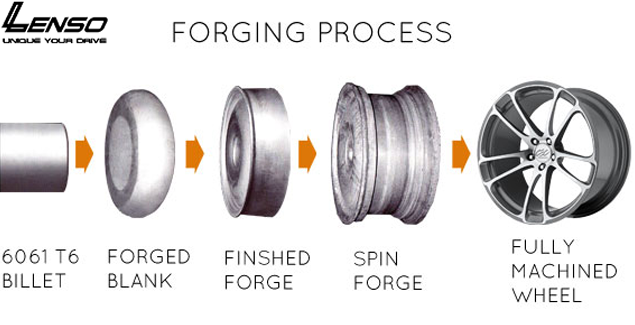
The exceptionally dense material provides a flawless finish and extreme structural durability. In the event of a severe impact, the dense, cohesive structure of a forged wheel is highly resistant to shattering. Instead of breaking apart into pieces, it is engineered to bend, helping to maintain tire pressure longer and significantly enhancing overall vehicle safety during emergencies.
2. Casting
This is the foundational method where molten metal is poured or injected into a mold. After the casting process, the wheels undergo rigorous furnishing and exhaustive testing, including X-ray inspections to detect any internal structural flaws or stress fractures. Modern casting has evolved dramatically to maximize durability and structural strength, utilizing advanced techniques such as:
-
Low Pressure Die Casting: Instead of pouring molten aluminum from the top, it is injected from the bottom of the mold using low pressure. This technique forces air bubbles upward and out of the mold, minimizing internal porosity. The result is a highly cohesive, robust metal structure that offers enhanced strength and consistency.
-
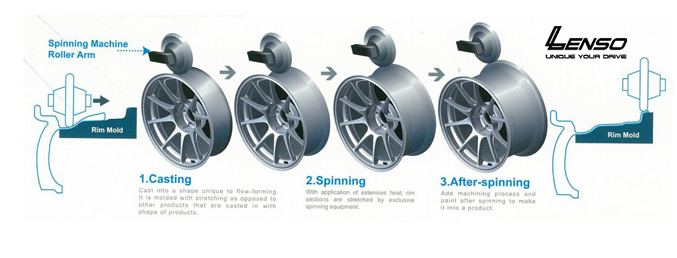
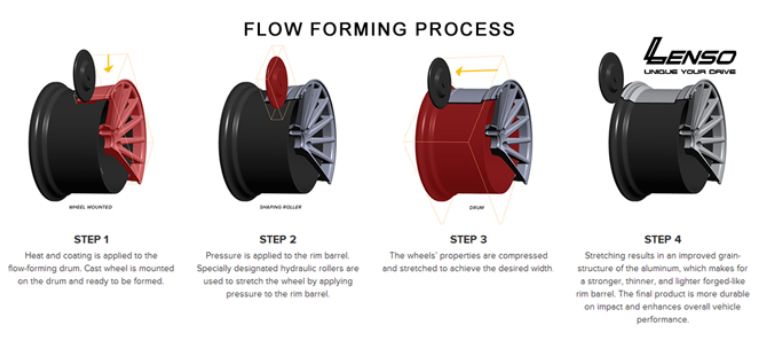
Flow Forming Casting: A highly advanced hybrid process. The wheel's barrel is initially cast at a fraction of its final width. It is then placed on a specialized machine that spins the wheel at high speeds while heavy steel rollers apply extreme pressure to stretch and compress the metal to its final shape. This intense pressure drastically increases the molecular density of the barrel, delivering exceptional structural durability and peak strength for demanding driving conditions.